
 Cart is empty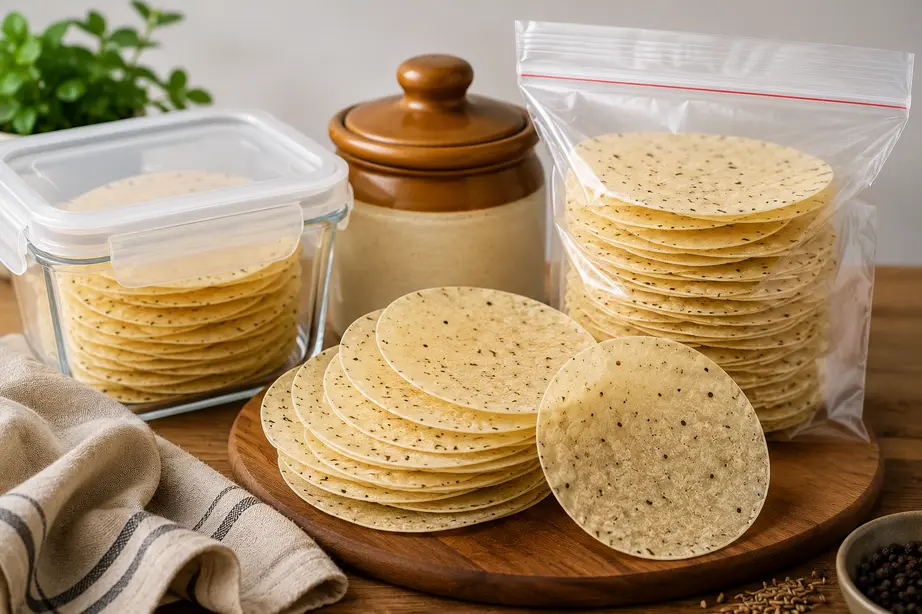
Homemade papad brings authentic taste and tradition to every meal. Unlike mass-produced snacks, homemade papad is often made with simple ingredients and without artificial preservatives, making it a natural choice for families.
However, because preservative-free papad is made naturally, proper storage becomes important to maintain its freshness and crunch.
In this guide, we’ll share simple tips to store homemade papad properly and enjoy its delicious taste for longer.
Why Proper Storage Matters for Homemade Papad
Homemade papad is sensitive to moisture, humidity, and air exposure. Since it contains no artificial preservatives, storing it correctly helps preserve its texture and flavor.
Proper storage helps:
- Maintain crispiness
- Protect from moisture
- Preserve flavor and aroma
- Extend freshness naturally
What Makes Papad Lose Its Freshness?
Several factors can affect papad quality:
Moisture and Humidity
Humidity is one of the biggest reasons papad becomes soft. When papad absorbs moisture from the air, it may lose its signature crunch.
Exposure to Air
Leaving the pack open for long periods allows air and moisture to enter, affecting freshness.
Improper Storage Conditions
Keeping papad near heat, steam, or direct sunlight can reduce its quality.
Best Way to Store Homemade Papad
Follow these simple storage tips:
Store in a Cool and Dry Place
Keep papad in a cool, dry area away from direct sunlight and moisture.
Use an Airtight Container After Opening
Once opened, transfer the papad to an airtight container or reseal the pack properly to maintain freshness.
Avoid Wet Hands
Always handle papad with dry hands to prevent moisture transfer.
Refrigeration for Longer Freshness
Homemade papad without preservatives may have a naturally shorter shelf life compared to commercially preserved products.
For best results:
- Enjoy the papad within one month for optimal freshness.
- If you wish to store it for a longer period, refrigeration is recommended.
- Keep the papad properly sealed before refrigerating to protect it from moisture.
Before roasting or frying refrigerated papad, allow it to reach room temperature for a few minutes.
Understanding Shelf Life of Preservative-Free Papad
The shelf life of papad depends on ingredients and storage conditions.
At DesiNacks, our papad is prepared using traditional methods without artificial preservatives. Because of this, it is best enjoyed fresh.
For the best taste and quality:
- Consume within one month under normal storage conditions.
- Refrigerate for extended storage.
A shorter shelf life is often a sign of fewer additives and a more natural product.
Common Storage Mistakes to Avoid
Avoid these mistakes:
❌ Leaving the packet open
❌ Storing near the stove or sink
❌ Using wet hands
❌ Exposing papad to humidity
❌ Keeping papad in direct sunlight
How long does homemade papad last?
Homemade preservative-free papad is best enjoyed within one month under normal storage conditions.
Can homemade papad be refrigerated?
Yes. Refrigeration helps extend freshness, especially for longer storage.
Why does papad become soft?
Papad absorbs moisture from the air, which affects its crispiness.
Does a shorter shelf life mean lower quality?
Not at all. In many cases, a shorter shelf life reflects the absence of artificial preservatives and a more natural product.
Enjoy the Authentic Taste of Homemade Papad
Freshness is one of the most important qualities of homemade food. Proper storage helps preserve the authentic taste and crunch of preservative-free papad.
At DesiNacks, we continue the tradition of making homemade papad without artificial preservatives—bringing natural taste to your table, one crispy bite at a time.
Add a Comment